Goodwill: A Thoughtful Holiday Embroidery Design
As a designer who’s stitched hundreds of holiday projects—from boutique baby onesies to custom aprons for local cafés—I opened Goodwill expecting warmth, not whimsy. What I found was a quiet, grounded design that leans into sincerity over sparkle. It doesn’t shout “Christmas!”—it invites pause. That matters. Especially when you’re stitching something meant to be held, gifted, or worn close.
First Impressions: Simplicity with Substance
At a glance, Goodwill reads as clean and centered—no tangled flourishes, no crowded borders. The composition feels balanced, with generous negative space around key elements. That breathing room isn’t just aesthetically pleasing; it’s practical. In embroidery, open areas translate to fewer stitches, less stabilizer dependency, and smoother transitions across curved surfaces like tote bag gussets or sweatshirt sleeves.
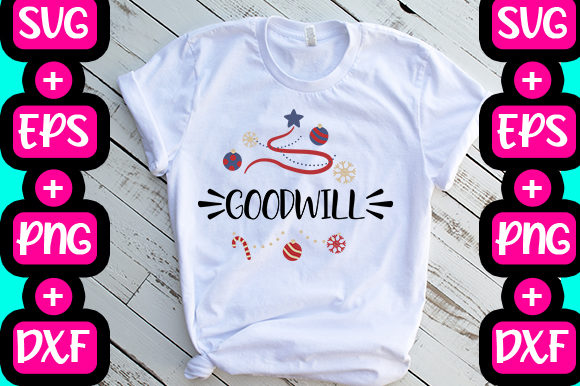
The theme is unmistakably seasonal but intentionally inclusive—think gentle script, soft curves, and a subtle motif (perhaps a stylized evergreen sprig or interwoven ribbon) rather than overt religious or commercial iconography. That makes Goodwill equally at home on a neutral linen tea towel for a wedding gift or a charcoal-gray baby blanket for a December arrival.
Real-World Stitching: Where Goodwill Shines—and Where It Needs Care
Last week, I prepped Goodwill for a batch of organic cotton tote bags bound for a local craft fair. We used medium-weight tear-away stabilizer and 40-weight rayon thread in deep forest green and cream. The result? Crisp edges, even satin stitch coverage, and zero puckering—even where the fabric shifted slightly during hooping. That reliability comes from thoughtful vector construction: consistent line weight, smooth anchor points, and no micro-gaps between shapes.
It also performed well on a lightweight cotton poplin baby onesie—but only after switching to cut-away stabilizer and reducing top tension by one notch. Why? Because Goodwill’s gentle curves include small, connected details (like the loop of a bow or the curve of a lowercase “g”) that can blur on thin, stretchy fabric without proper support. On denser fabrics—fleece-lined sweatshirts, twill caps, or canvas aprons—it held its shape beautifully, even at 8” hoop size.
Where Goodwill asks for attention: tiny corners and tight internal angles. If you’re planning an embroidered patch or a high-detail cap front, zoom in on those areas before digitizing. Some versions of this design may need minor cleanup—especially if converted from PNG to embroidery file without professional digitization. Always test on scrap fabric first, especially if using dark thread on light fabric or vice versa. Contrast matters more than you think for readability at small scales.
Fabric & Function: Matching Design to Purpose
Goodwill works best where intentionality matters—not just visibility. It’s not a bold chest logo for a festival t-shirt. It’s the quiet monogram on a hand-stitched pillow cover. The understated accent on a chef’s apron pocket. The tender detail on a newborn’s knit cap.
- Tote bag design: Excellent. Its centered layout fills standard 4×4 or 5×7 hoops cleanly, and the moderate stitch density prevents stiffness.
- Sweatshirt embroidery: Strong performer—especially on midweight fleece. Avoid heavy fill-stitch blocks; Goodwill relies on outline clarity and subtle texture.
- Baby embroidery: Ideal for onesies, burp cloths, and crib blankets—provided you confirm thread safety and use appropriate stabilizer.
- Holiday embroidery: Fits seamlessly into curated collections—think “quiet joy” alongside minimalist snowflakes or muted wreaths, not competing with glitter-heavy motifs.
- Commercial embroidery: Clean vector origins (SVG, EPS) mean easy scaling for large-format applique or multi-position layouts on staff uniforms or shop signage.
What Goodwill Adds to Your Finished Product
This isn’t just about legibility—it’s about resonance. Customers notice when a design feels *considered*. Goodwill elevates handmade presentation because it avoids visual noise. On an Etsy listing, it reads as confident, not cluttered. On a boutique shelf, it signals care—not just craft, but curation.
That translates directly to perceived value. A personalized gift with Goodwill stitched on a linen kitchen towel feels intentional, not generic. A small shop product—say, a set of embroidered napkins—feels cohesive and brand-aligned, especially if your aesthetic leans earthy, modern, or quietly traditional.
And yes, it builds trust. When buyers see consistent, clean stitching across your portfolio—and recognize that same thoughtful restraint in Goodwill—they begin to associate your work with reliability. That’s gold for creative entrepreneurs building long-term relationships.
Practical Designer Notes Before You Stitch
Before committing Goodwill to your next project, take these steps:
- Test the design on scrap fabric matching your final substrate—especially for stretchy, textured, or dark fabrics.
- Check thread color contrast in natural light. Cream on oatmeal? Fine. Light gray on heather charcoal? Might disappear.
- Review stitch density: avoid dense fill areas on delicate items like baby clothes unless stabilized properly.
- Confirm hoop size compatibility. While Goodwill scales well, very small versions may lose definition—don’t shrink below 3” wide without testing.
- Inspect small details in black-and-white mockups. Does the “ll” in “Goodwill” remain distinct? Does the motif retain shape?
- Use appropriate stabilizer: tear-away for stable wovens, cut-away for knits, and fusible for lightweight linens.
- Verify licensing terms. Since this is listed as a Graphics file set (SVG, DXF, EPS, PNG), confirm whether commercial use of finished embroidered items is permitted—and whether resale of the digital embroidery file itself is allowed.
Remember: Goodwill isn’t a plug-and-play graphic. It’s a starting point—a mood, a tone, a quiet promise. How you interpret it—through thread choice, fabric pairing, placement, and finishing—shapes whether it lands as heartfelt or forgettable. Treat it like the thoughtful asset it is.