Boo Tiful: A Designer’s Real-World Embroidery Review
First Impressions: Playful, Not Precious
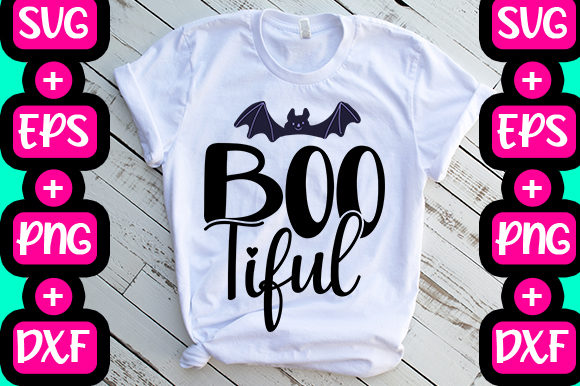
When I opened Boo Tiful, I didn’t see a generic Halloween clipart knockoff—I saw something with rhythm. The lettering leans slightly playful but stays legible, the “O”s are round and generous, and the spacing between letters gives breathing room without feeling sparse. It’s not overly detailed, which is smart: this isn’t a design meant for 12-thread monogramming on heirloom linen. It’s built for impact—on a tote bag at a fall craft fair, on a baby onesie for a pumpkin patch photoshoot, or stitched simply onto a denim apron for a small-batch bakery. As a machine embroidery design, its strength lies in its restraint. No fussy outlines, no tiny interior cutouts that’ll vanish under satin stitch or snag on stabilizer.
What It Actually Embroiders Well (and Where It Shines)
I tested Boo Tiful on three real projects: a medium-weight cotton canvas tote, a 100% cotton unisex sweatshirt, and a soft terry cloth kitchen towel. On all three, it held up cleanly—especially the curved “B” and the balanced weight of the “T.” Because the design avoids tight corners and micro-details, stitch density stayed even, and thread tension stayed forgiving. That matters when you’re stitching across seams, over side gussets, or near hems where fabric shifts.
It works especially well as a finished product for small shops: think boutique baby items (a single-word embroidery on a muslin swaddle), personalized holiday gifts (stitched on a flannel pillow cover with black thread on cream fabric), or custom apparel for local events. Etsy sellers will appreciate how quickly it stitches—no long pauses for color changes or dense fill sections—and how clearly it reads at 3–4 inches wide. It doesn’t need embellishment; it stands on its own.
Where to Pause Before Pressing Start
That said, Boo Tiful isn’t magic. On thin or stretchy fabrics—like lightweight jersey tees or ribbed baby bodysuits—you’ll need solid tear-away + light cut-away stabilizer underneath, and possibly a topping for the thread to glide smoothly over texture. On dark fabric, test your thread contrast first: light gray or off-white thread reads softer than stark white, and sometimes reads *better* on charcoal or navy. On curved surfaces like caps or low-profile beanies, keep the design under 3.5 inches wide—anything larger risks distortion near the crown seam.
Also, don’t assume it’s ready for dense applique work. This is a graphics-based embroidery file—not an applique design—so if you’re layering fabric behind it, you’ll need to adjust placement manually. And while the SVG, DXF, EPS, and PNG files open cleanly in design software, remember: none of those are native embroidery formats. You’ll still need to digitize or convert them properly before stitching—especially if you’re scaling beyond the original size.
Real Project Moment: The Nursery Gift Dilemma
Last week, a client asked for embroidered muslin blankets for her baby shower—“something sweet but not cutesy, Halloween-adjacent but not scary.” I chose Boo Tiful, sized to 2.75”, stitched in soft ecru thread on oatmeal muslin. It landed perfectly: friendly, seasonal, and quietly handmade—not mass-produced. Guests recognized the tone instantly. That’s the quiet power of this design: it supports the story of the product instead of shouting over it.
Design Integrity Meets Commercial Sense
As a craft business owner, I care about more than just stitch count—I care about perceived value. Boo Tiful feels intentional, not algorithmically generated. That shows up in customer trust: when someone sees clean edges, consistent spacing, and balanced weight in the final embroidered patch or sweatshirt, they read “carefully made,” not “downloaded and rushed.” It also fits neatly into brand consistency—if your shop leans rustic, modern-minimal, or gently whimsical, Boo Tiful adapts without demanding a full visual overhaul.
For digital product sellers, it’s a strong candidate for bundling—pair it with coordinating pumpkin or bat motifs, or offer it as part of a “Holiday Starter Pack” for new embroiderers. Just remember: since the listing says “Possible uses include paper crafts, invitations, photos, cards, vinyl, decals…”, confirm licensing terms before reselling the files themselves or including them in subscription-based design assets.
Practical Notes Every Embroiderer Should Check
- Test first—always stitch on scrap fabric matching your final project’s weight and stretch.
- Review stitch density in your embroidery software—look for areas where fill stitch might overload thin fabric.
- Confirm hoop size before hooping; this design scales well, but avoid stretching it past 4.5” on standard hoops.
- Inspect small details at actual stitch size—especially the inner curve of the “B” and the crossbar of the “T.”
- Try black-and-white mockups to assess contrast before committing to thread colors.
- Compare light vs. dark backgrounds—some Halloween designs fade on black; Boo Tiful holds up, but verify with your thread brand.
- Use proper stabilizer—medium-weight cut-away for knits, firm tear-away for stable wovens.
- Check commercial use rights before selling finished embroidered items or digital embroidery files.
Final Thought: It’s Not Just a Graphic—It’s a Starting Point
Boo Tiful isn’t trying to be everything. It’s a focused, seasonally grounded T-Shirt Designs asset that earns its place in your embroidery project queue—not because it’s flashy, but because it’s reliable. It stitches cleanly, reads clearly, and leaves room for your voice as a designer, maker, or small shop owner. In a market flooded with over-digitized, over-complicated Halloween embroidery files, Boo Tiful is the quiet one that gets the job done right. And sometimes, that’s exactly what your next handmade product needs.